
Why You Keep Having the Same Fight — And What’s Really Going On Beneath It
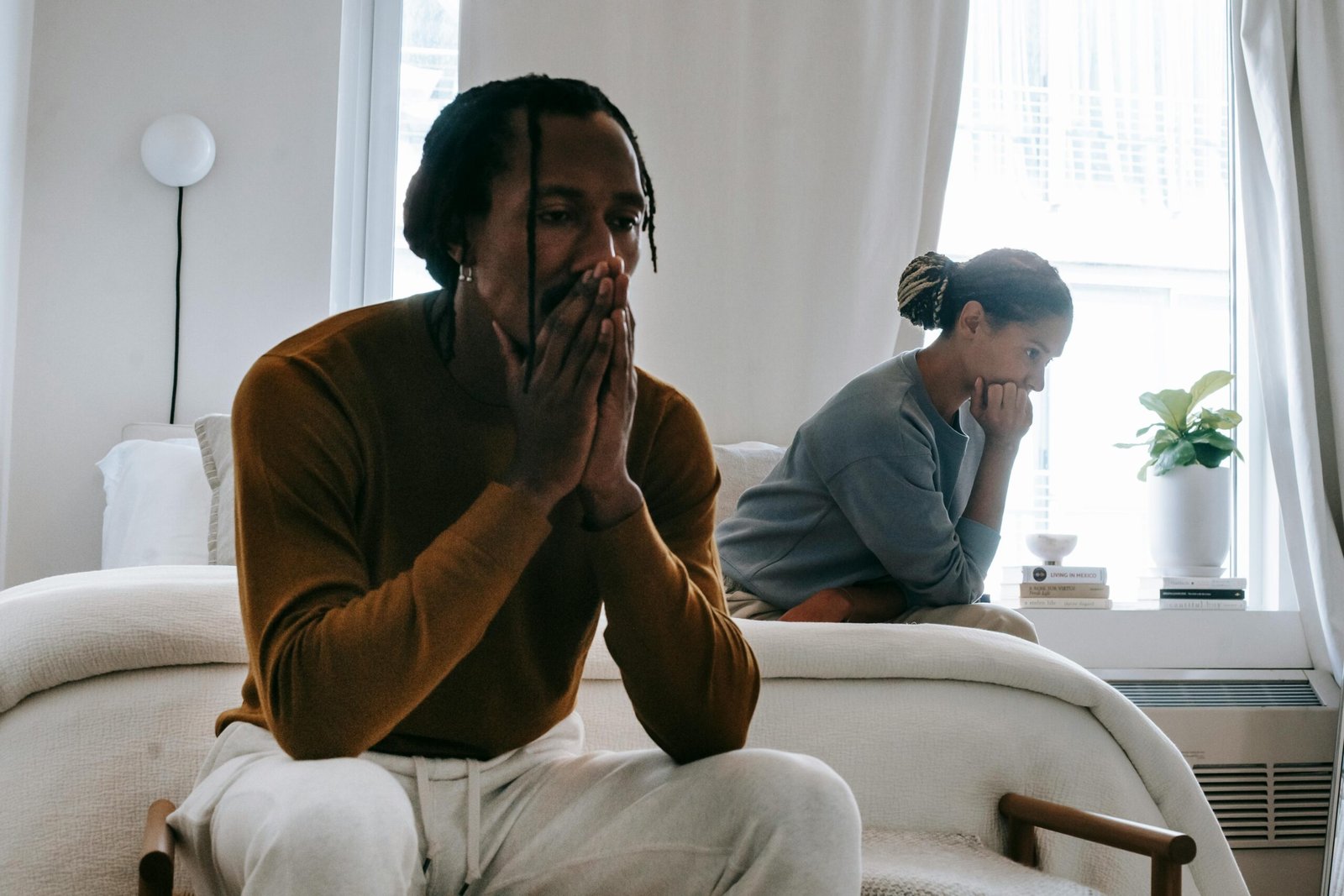
Sarah and James came to see me after seven years together. They were exhausted.
“We keep having the same fight,” Sarah told me, looking exhaused. “It doesn’t matter what it starts with, the dishes, money, the kids, it always ends the same way. I’m angry and he’s completely shut down.”
James nodded. “I don’t even know what I did wrong half the time. I just know that whatever I say makes it worse.”
I hear this from almost every couple I work with. And here’s what I want you to know:
The fight isn’t really about the dishes.
The Pattern Has a Name
In Emotionally Focused Therapy (EFT), we call it the cycle — a predictable, painful loop that couples get stuck in, often without realising it’s happening.
It usually looks something like this:
One partner feels disconnected, anxious, or afraid of losing closeness. They reach out, but it comes out as criticism, frustration, or repeated requests. “You never listen.” “You’re always on your phone.” “Why don’t you care?”
The other partner feels attacked, overwhelmed, or like they can never get it right. So they do what humans do when they feel flooded, they pull back. They go quiet. They leave the room.
And what does the first partner feel when their person withdraws?
More disconnected. More afraid. More urgent.
So they push harder. And the cycle continues.
Neither person is the villain. Both people are trapped.
It’s Not About Who’s Right
One of the most important things I do in couples therapy is help partners stop arguing about the content of the fight, and start looking at the shape of it.
From a systems perspective, your relationship is more than two individuals. It’s a living system with its own patterns, its own rules, its own rhythms. And when that system gets stressed, it defaults to familiar loops. Not because you’re broken, and not because you chose the wrong person.
Because the cycle is doing its job — it’s protecting each of you from deeper fears.
For Sarah, the fear underneath her anger was: “I’m not important to you. I’m alone in this relationship.”
For James, the fear beneath his silence was: “No matter what I do, I’ll never be enough.”
Neither of them knew the other was scared. They only saw the behaviour, the pushing, the shutting down, and made it mean something about themselves, or about the relationship.
What the Research Tells Us
EFT was developed by Dr. Sue Johnson and is one of the most rigorously researched approaches to couples therapy available. Studies show that 70–75% of couples who go through EFT move from distress to recovery, and approximately 90% show significant improvement.
The reason it works isn’t because couples learn new “communication techniques.” It’s because they learn to see the cycle, to recognise the pattern as the problem, not each other, and to share what’s happening underneath it.
When James could say, “I go quiet because I’m terrified of losing you,” everything shifted for Sarah.
When Sarah could say, “I get loud because I’m scared you don’t care,” James finally understood why she pushed.
The fight didn’t change. The meaning of it did.
Three Signs You Might Be Stuck in a Cycle
You don’t have to be in crisis to benefit from couples therapy. Here are some signs the cycle might be running your relationship:
- Arguments escalate quickly – a small comment becomes a major conflict before either of you understands how
- You feel more like roommates than partners – emotionally distant, polite, but disconnected
- One of you shuts down and one of you ramps up — the pursuer-withdrawer pattern is one of the most common we see in therapy
- You feel like you’re talking but not being heard — you’re both saying words, but neither of you feels understood
- You walk on eggshells — conversations get avoided to prevent another blowup
If any of these resonate, you’re not alone. And more importantly, this is changeable.
What Couples Therapy Actually Looks Like
When couples come to The Beach Haven, we don’t spend sessions refereeing arguments or handing out homework.
We slow things down.
We look at what each person is carrying into the room. We notice the moment the cycle starts, sometimes mid-session, and we use it as a doorway. What just happened? What did you feel? What did you need?
Over time, couples learn to step out of the cycle together. To interrupt it. To reach for each other instead of withdrawing or attacking.
It’s not quick. It’s not always comfortable. But it is profoundly worth it.
You Don’t Have to Keep Having the Same Fight
If you and your partner are exhausted by the loop, if you love each other but something keeps pulling you apart, I’d love to help.
Couples therapy at The Beach Haven is available in-person in Joondalup and online across Australia.
Or reach out directly at tracy@thebeachhaven.com.au — I’m happy to answer any questions before you book.
Tracy Rattray is a specialised grief counsellor and couples therapist based in Joondalup, Western Australia. She practices from an EFT (Emotionally Focused Therapy) and works from systems perspective. Tracy holds an B.A (hons) in Psychology, Masters in Counselling and specialist grief and couples therapy. The Beach Haven offers individual, couples, and family counselling in-person and online.